Korean Bibimbap
Highlighted under: Local Cooking
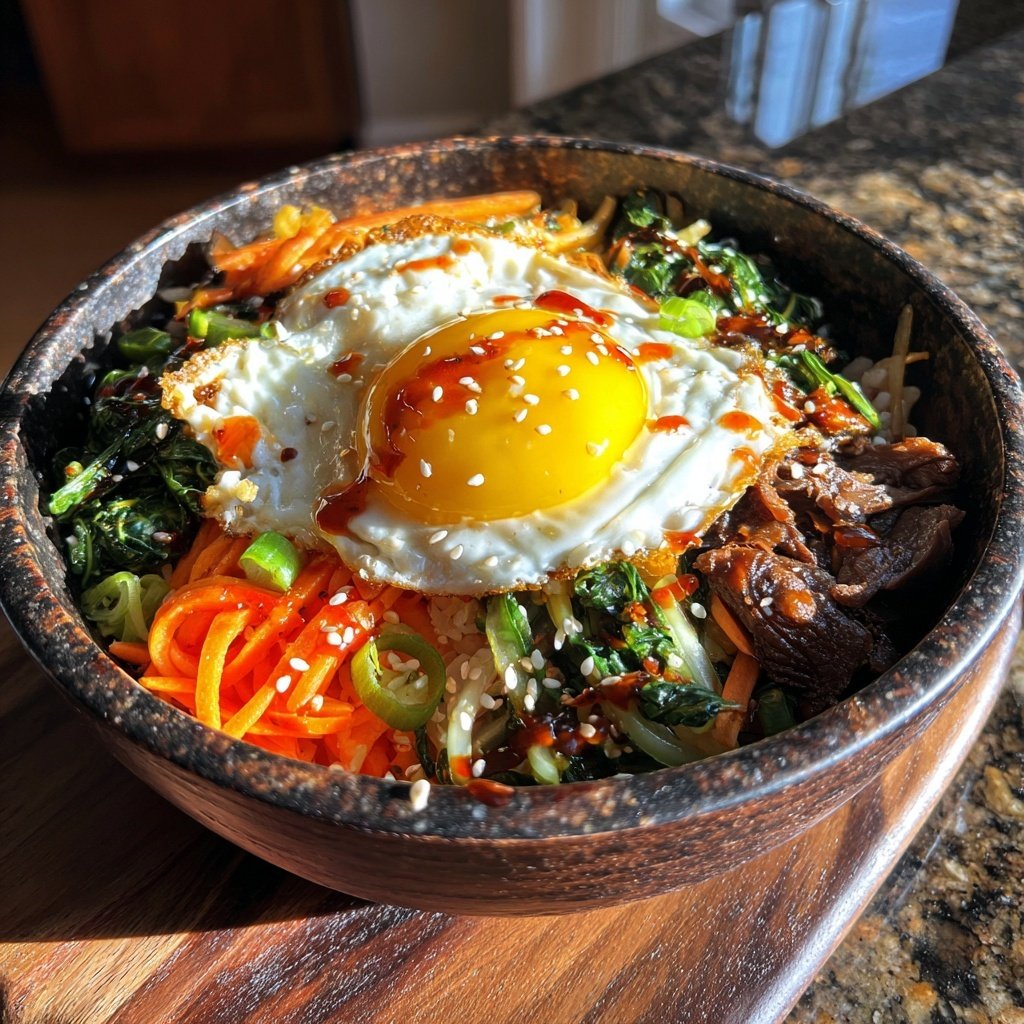
Korean Bibimbap is a vibrant and nutritious rice bowl topped with an array of colorful vegetables, marinated meat, and a perfectly fried egg, all drizzled with spicy gochujang sauce.
Discover the essence of Korean cuisine with this delicious Bibimbap recipe. It's not just a meal; it's a celebration of colors, flavors, and textures that come together beautifully.
Why You'll Love This Recipe
- A harmonious mix of flavors and textures in every bite
- Customization options for every taste preference
- A wholesome and balanced meal packed with nutrients
The Art of Bibimbap
Bibimbap is more than just a meal; it is an art form that beautifully combines various ingredients, each contributing its unique flavor and texture. Traditionally served in a hot stone pot, the rice forms a crispy layer at the bottom while the vegetables and protein sit atop, creating a delightful contrast. This dish showcases the essence of Korean cuisine, emphasizing balance and harmony among different components.
In Korea, bibimbap is often enjoyed as a meal for celebrations or gatherings, symbolizing the importance of unity and sharing. Whether enjoyed at home or in a restaurant, this dish invites you to experiment with colors, tastes, and textures, ensuring each bite is a new experience. The bright colors of the vegetables, the rich flavor of the meat, and the spicy kick of gochujang come together in a delightful symphony.
Additionally, bibimbap is a versatile dish. You can personalize it based on seasonal vegetables or dietary preferences. Whether you prefer beef, tofu, or a medley of mushrooms, the options are endless, making it a favorite for families and foodies alike.
Nutritional Benefits
Korean Bibimbap is not only delicious but also packed with nutrients. The inclusion of fresh vegetables like spinach, zucchini, and carrots provides essential vitamins and minerals, while bean sprouts contribute dietary fiber and protein. This combination creates a wholesome meal that supports overall health and well-being.
The proteins in this dish, whether from beef or tofu, offer a good source of energy and help in muscle repair and growth. Additionally, the use of sesame oil adds healthy fats that are beneficial for heart health. With such a diverse array of ingredients, bibimbap is a balanced meal that can keep you satisfied and energized throughout the day.
Moreover, the probiotic benefits of fermented gochujang enhance digestion, making this dish not only tasty but also gut-friendly. By incorporating a variety of colors and ingredients, bibimbap ensures that you're getting a spectrum of nutrients necessary for a healthy diet.
Tips for Perfecting Bibimbap
To achieve the perfect bibimbap, start with quality ingredients. Opt for short-grain rice, as it tends to be stickier and holds together better, allowing for easy mixing of flavors. Ensuring your vegetables are cooked to the right tenderness is crucial; they should be vibrant and crisp without being mushy, maintaining their nutritional value and crunch.
When it comes to the fried egg, a runny yolk adds a creamy texture to the dish. If you're feeling adventurous, try experimenting with different cooking methods, such as poaching or even adding a bit of cheese for a creamy twist. The key is to create a meal that's not just visually appealing but also full of flavor.
Lastly, don't shy away from customizing the spice level. Gochujang can be adjusted according to your taste preferences. For those who like it milder, consider mixing it with a bit of sesame oil or honey. This flexibility allows everyone to enjoy bibimbap according to their palate, making it a truly inclusive dish.
Ingredients
Ingredients
For the Bibimbap
- 2 cups cooked short-grain rice
- 1 cup spinach, blanched
- 1 cup bean sprouts, blanched
- 1 carrot, julienned
- 1 zucchini, julienned
- 1 cup shiitake mushrooms, sliced
- 4 eggs
- 200g beef (or tofu for a vegetarian option), thinly sliced
- 2 tablespoons gochujang (Korean chili paste)
- 2 tablespoons sesame oil
- 1 tablespoon soy sauce
- 1 garlic clove, minced
- Sesame seeds, for garnish
- Green onions, sliced, for garnish
Feel free to mix and match the vegetables according to your preference!
Instructions
Instructions
Prepare the Ingredients
In a skillet, heat sesame oil and sauté garlic until fragrant. Add the beef (or tofu) and soy sauce, cooking until browned.
Cook the Vegetables
In the same skillet, stir-fry the zucchini and carrots until tender. Season with salt and pepper. Set aside.
Fry the Eggs
In a separate pan, fry the eggs sunny side up until the whites are set but the yolks are still runny.
Assemble the Bibimbap
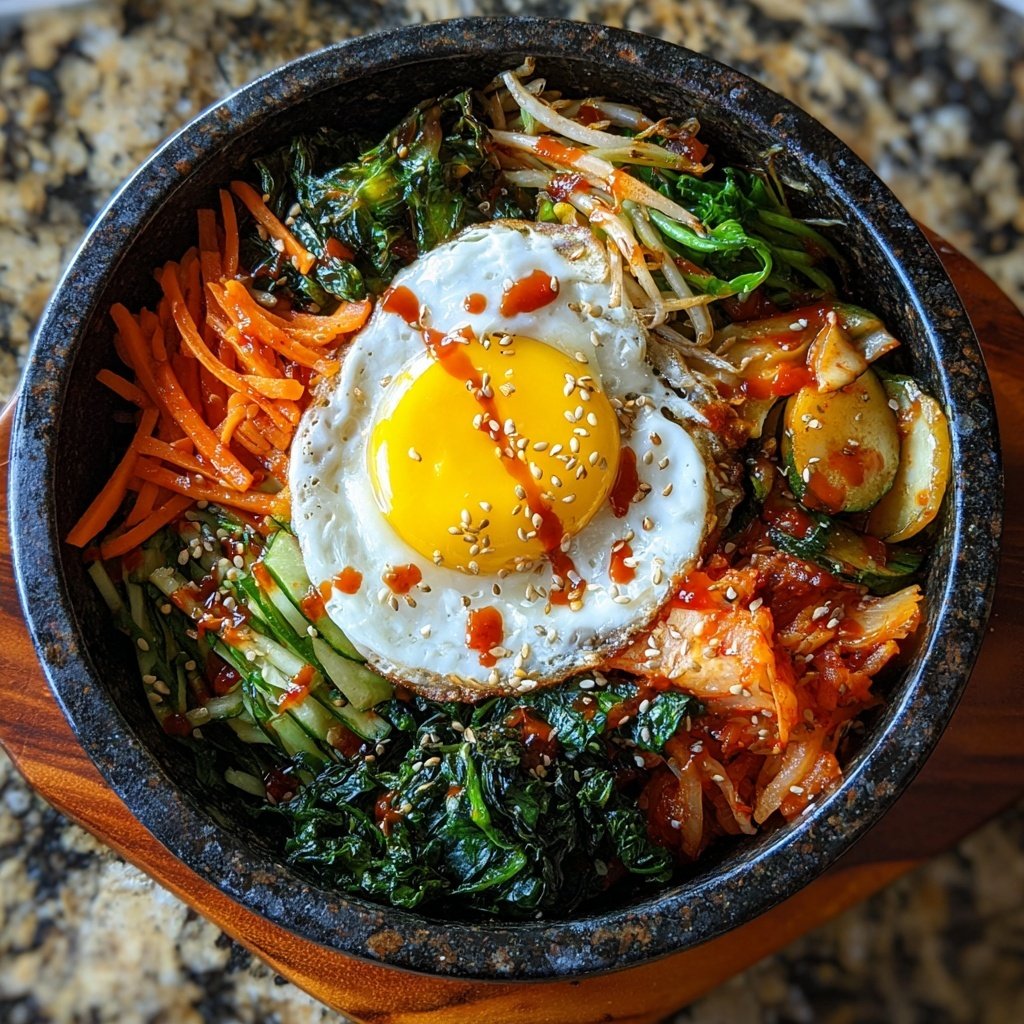
In serving bowls, place a portion of rice. Top with the sautéed vegetables, beef (or tofu), and a fried egg. Drizzle with gochujang and garnish with sesame seeds and green onions.
Mix everything together before eating for the best flavor!
Pro Tips
- Feel free to add any seasonal vegetables or proteins of your choice to personalize your Bibimbap.
Serving Suggestions
Bibimbap is best served fresh, but it can also be enjoyed as leftovers. To reheat, simply warm the rice and vegetables in a skillet, adding a splash of water to maintain moisture. For an extra touch, consider drizzling a bit more sesame oil before serving. This dish pairs well with a side of kimchi, providing a tangy kick that complements the flavors of bibimbap beautifully.
For entertaining, consider offering a bibimbap bar where guests can choose their own toppings. Provide a variety of vegetables, proteins, and sauces, allowing everyone to create their perfect bowl. This not only makes for a fun dining experience but also showcases the versatility of this beloved Korean dish.
Storage and Reheating
If you have leftovers, store them in an airtight container in the refrigerator. Bibimbap can last for up to three days, making it a convenient option for meal prep. When reheating, it's best to separate the components to maintain their texture. Heat the rice and protein in the microwave or skillet, while the vegetables can be quickly sautéed to restore their freshness.
For the fried egg, consider cooking a new one to top the reheated bibimbap, as this will enhance the overall flavor. When ready to serve, simply drizzle with gochujang and a sprinkle of sesame seeds to elevate the dish. This makes for a quick and nutritious meal that’s ready in minutes.
Questions About Recipes
→ Can I make Bibimbap vegetarian?
Absolutely! Just substitute the beef with tofu or additional vegetables.
→ What can I serve with Bibimbap?
Bibimbap is a complete meal on its own, but you can serve it with kimchi or pickled vegetables for extra flavor.
→ How do I store leftovers?
Store any leftovers in an airtight container in the refrigerator for up to 2 days.
→ Can I use brown rice instead of white rice?
Yes, brown rice can be used for a healthier option, but it may require longer cooking time.
Korean Bibimbap
Created by: Saskia Morton
Recipe Type: Local Cooking
Skill Level: Intermediate
Final Quantity: 4 servings
What You'll Need
For the Bibimbap
- 2 cups cooked short-grain rice
- 1 cup spinach, blanched
- 1 cup bean sprouts, blanched
- 1 carrot, julienned
- 1 zucchini, julienned
- 1 cup shiitake mushrooms, sliced
- 4 eggs
- 200g beef (or tofu for a vegetarian option), thinly sliced
- 2 tablespoons gochujang (Korean chili paste)
- 2 tablespoons sesame oil
- 1 tablespoon soy sauce
- 1 garlic clove, minced
- Sesame seeds, for garnish
- Green onions, sliced, for garnish
How-To Steps
In a skillet, heat sesame oil and sauté garlic until fragrant. Add the beef (or tofu) and soy sauce, cooking until browned.
In the same skillet, stir-fry the zucchini and carrots until tender. Season with salt and pepper. Set aside.
In a separate pan, fry the eggs sunny side up until the whites are set but the yolks are still runny.
In serving bowls, place a portion of rice. Top with the sautéed vegetables, beef (or tofu), and a fried egg. Drizzle with gochujang and garnish with sesame seeds and green onions.
Extra Tips
- Feel free to add any seasonal vegetables or proteins of your choice to personalize your Bibimbap.
Nutritional Breakdown (Per Serving)
- Calories: 600 kcal
- Total Fat: 25g
- Saturated Fat: 6g
- Cholesterol: 245mg
- Sodium: 800mg
- Total Carbohydrates: 70g
- Dietary Fiber: 4g
- Sugars: 5g
- Protein: 25g